
Alabama schools report great progress and cultural shifts after one year of phone-free classrooms
Schools that went phone-free report stronger engagement, more conversations at lunch, better discipline, and less cheating.

End Chronic Disease CEO Kelly McKenna joined FOX 6’s Good Day Alabama to discuss the impact of Alabama’s efforts to limit student cellphone and screen use in schools, including significant changes reported by some schools that proactively adopted phone-free policies during the school day.
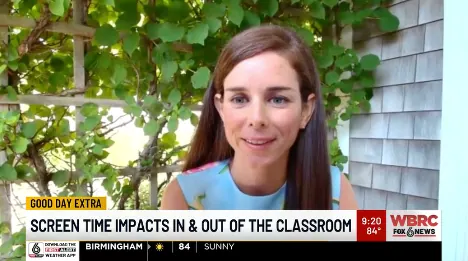
McKenna also shared practical steps families can take at home, noting that healthy technology habits start with adults: the largest review to date, encompassing nearly 15,000 families across 10 countries, found that when parents were more distracted by technology around their children, their kids were more likely to experience emotional and behavioral challenges, less secure attachment to their parents, and higher screen-time use themselves.
Alabama’s experience comes amid growing national momentum around classroom cellphone restrictions. States across the political spectrum are increasingly adopting policies designed to reduce distractions and create healthier learning environments, while early reports from schools implementing restrictions point to improvements in student engagement, behavior, and face-to-face interaction.
The improvements extend beyond fewer classroom distractions. At Pike Road Junior High, school leaders reported stronger student engagement, deeper social connections, and eighth-grade academic growth that exceeded expectations. Gadsden City High School saw students talking more during lunch instead of looking at their phones, while Stanhope Elmore High School reported improvements in discipline, reduced cheating, and better behavior both on campus and during field trips.
Similar results are emerging nationwide. New York officials have described early gains as “jaw-dropping,” with roughly 80% of teachers reporting positive results, while in Arkansas, 86% of teachers said students were more engaged after classroom cellphone restrictions were implemented.
End Chronic Disease continues to support efforts around the country to promote healthier technology habits for children, both in schools and at home, as policymakers, educators, and parents increasingly examine the role excessive screen use can play in sleep, physical activity, social connection, and overall well-being.
Follow our work on screen use on the News page, or sign up for our newsletter for the next update.
This update first appeared in the End Chronic Disease newsletter on August 4, 2026. Parental technology use review: JAMA Pediatrics, 2025.