
Back-to-school season brings renewed attention to student cellphone and screen use
From a federal symposium to phone-free classrooms in New York and Arkansas, the goal is not to remove technology from children’s lives, but to keep it from crowding out what healthy development needs.

As students across the country head back to school, cellphones and screen time are once again at the center of conversations among parents, educators, policymakers, and health leaders about how to create healthier environments for children to learn, develop, and connect.
End Chronic Disease has been closely involved in that conversation. On September 1, CEO Kelly McKenna joined leaders from technology, medicine, research, education, government, and advocacy in Washington, D.C., for the U.S. Department of Health and Human Services’ “Live Real Life Symposium,” focused on addressing harms of excessive screen use among children and sharing actionable ways to support healthier childhood development.
The gathering was part of HHS’s broader “Live Real Life” campaign, which is encouraging families, schools, and communities to adopt healthier technology use while creating more opportunities for children to play, move, connect with others, and engage with each other and the world around them.
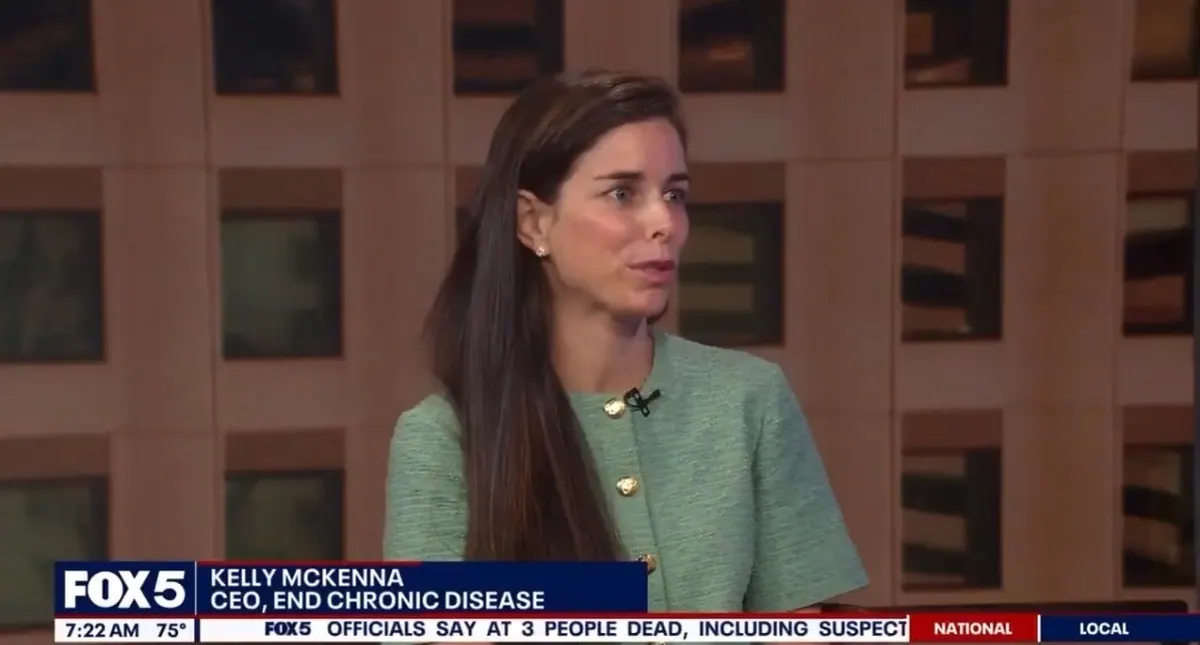
Two days later, Kelly joined FOX 5 DC to discuss the risks and challenges of excessive student cellphone use and what families, schools, and policymakers can do to help children develop healthier relationships with technology.
The conversation builds on work End Chronic Disease has been advancing around the country. As we shared in a previous newsletter, schools implementing phone-free policies are reporting encouraging early results, from stronger student engagement and social connection to improvements in behavior and academic growth. In New York, roughly 80% of teachers surveyed reported positive results, while in Arkansas, 86% of teachers said students were more engaged following classroom cellphone restrictions.
As a new school year gets underway, the goal isn’t to eliminate technology from children’s lives, but to make sure it doesn’t crowd out the experiences essential to healthy development, including physical activity, sleep, face-to-face connection, learning, and play.
Follow our work on screen use on the News page, or sign up for our newsletter for the next update.
This update first appeared in the End Chronic Disease newsletter on October 2, 2026.