
Groundbreaking “food is medicine” study reduces hospitalizations among Medicaid recipients by 31%
Medically tailored meals cut hospital visits, emergency visits, and costs for Medicaid patients with chronic conditions, and the savings covered nearly the whole cost of the meals.

A new study by researchers at Tufts University found that Medicaid recipients with conditions such as diabetes, heart disease, and depression who received medically tailored meals experienced significantly fewer hospitalizations and emergency department visits, while healthcare costs declined substantially.
Participants received nutrition counseling plus up to 10 medically tailored meals per week matched to their health conditions. Key findings from the study included:
- Over six months, patients receiving medically tailored meals averaged 1.01 hospital visits versus 1.46 among comparison patients, a 31% reduction.
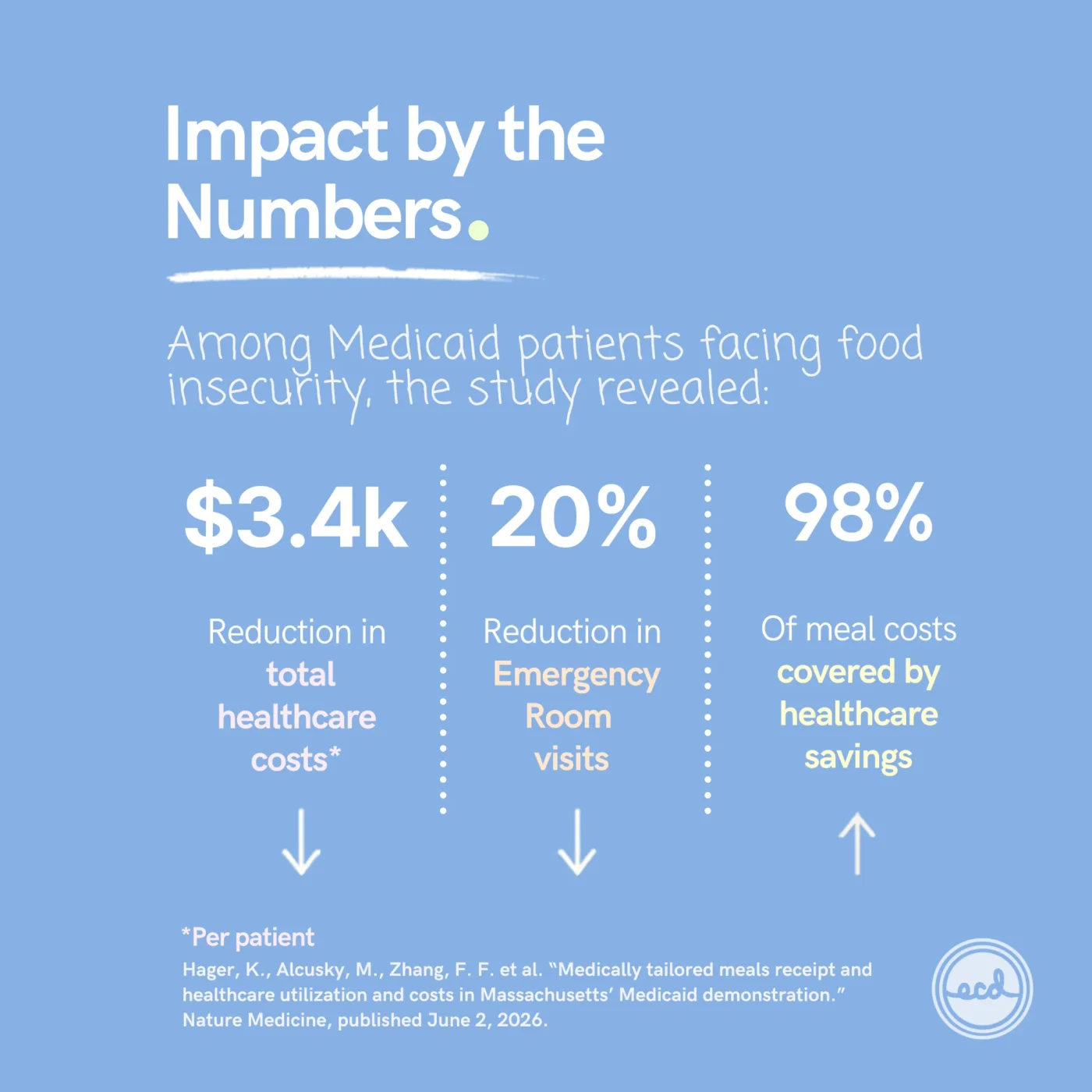
- $3,433 lower healthcare costs per patient.
- 20% fewer emergency department visits.
- Healthcare savings offset 98% of meal program costs.
Follow our work on nutrition and access to care on the News page, or sign up for our newsletter for the next one.
Hager K, Alcusky M, Zhang FF, et al. Medically tailored meals receipt and healthcare utilization and costs in Massachusetts’ Medicaid demonstration. Nature Medicine, published June 2, 2026. nature.com. This spotlight first appeared in the End Chronic Disease newsletter on July 2, 2026.